OSHA Pallet Stacking Height Regulations & Guidelines 2026
Last Updated: Jan 16, 2026 Warehouses and distribution centers across the United States handle millions of pallets daily. While pallets make storage and transportation efficient, improper stacking creates serious hazards that can lead to worker injuries, property damage and costly OSHA violations. Understanding OSHA pallet stacking regulations isn't just about avoiding fines. It's about protecting your team and creating a safer workplace. This comprehensive guide covers everything warehouse managers and safety officers need to know about OSHA pallet safety and compliance in 2026.
OSHA Regulations Pallet Stacking: A Quick Guide
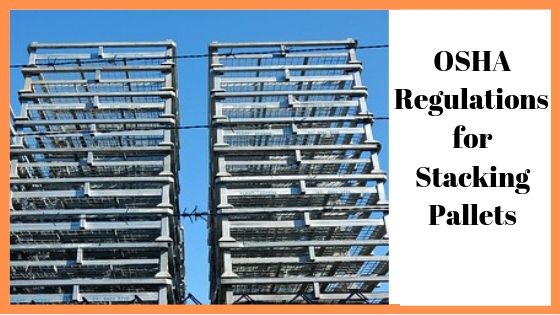
What Is OSHA’s Pallet Stacking Regulations?
OSHA regulates pallet storage under 29 CFR 1910.176(b) which requires that materials stored in tiers must be stacked, blocked, interlocked and limited in height to remain stable and secure against sliding or collapse.
The three most critical OSHA pallet stacking regulations are:
1. Stability Requirement: All pallet stacks must be stable and secure (29 CFR 1910.176(b))
2. Sprinkler Clearance: Maintain minimum 18-inch vertical clearance below sprinkler systems (29 CFR 1910.159(c)(10))
3. Height Guidelines: While OSHA pallet stacking height isn’t specifically mandated, the National Fire Protection Association (NFPA) recommends a 15-foot maximum for idle pallets
Understanding OSHA Standard 29 CFR 1910.176
The primary regulation governing pallet storage falls under OSHA’s material handling standards. According to 29 CFR 1910.176(b), storage of materials shall not create a hazard. This means all bags, containers, bundles and pallets stored in tiers must be properly secured.
OSHA pallet safety regulations keep this requirement intentionally broad to cover various workplace situations. Inspectors can cite violations whenever pallet stacking creates unsafe conditions, even if specific OSHA pallet stack height limits aren’t exceeded.
What Does Stable and Secure Pallet Stack Actually Mean?
A stable pallet stack that meets OSHA pallet safety standards has these characteristics:
- No visible tilting or leaning
- Uniform pallet sizes throughout the stack
- Even weight distribution across the pallet surface
- Proper blocking or interlocking between layers
- Secure wrapping or banding on loaded pallets
- Clear space around stacks for safe access
The Critical 18-Inch Sprinkler Clearance Rule
The most specific OSHA pallet stacking height requirement involves fire sprinkler systems. Under 29 CFR 1910.159(c)(10), the minimum vertical clearance between sprinklers and materials below must be 18 inches.
This OSHA pallet stack height rule applies throughout your entire storage area as a horizontal plane. You cannot store materials within 18 inches of any sprinkler head anywhere in the facility. This clearance ensures proper water distribution during fires and allows sprinkler patterns to overlap effectively.
Common Sprinkler Clearance Violations
Many warehouses unknowingly violate this OSHA pallet stacking regulation by:
- Stacking seasonal inventory too high during peak periods
- Failing to account for pallet overhang on racking systems
- Not measuring from sprinkler deflectors (the actual discharge point)
- Assuming 18 inches applies only to materials directly under sprinklers
According to OSHA interpretation letters, the 18-inch requirement creates a horizontal plane across the entire room. Materials placed to the side of sprinklers still cannot breach this clearance limit.
NFPA Guidelines: The 15 Foot OSHA Pallet Stacking Height Rule Explained
While OSHA pallet stacking height isn’t specifically mandated in federal regulations, the National Fire Protection Association provides industry standards. The NFPA 1 Fire Code (2024 edition), Section 34.11.3.3, states that idle pallet stacks should not exceed 15 feet in height or cover areas greater than 400 square feet.
Many warehouse veterans know this as the standard OSHA pallet stack height guideline. This recommendation has become widely accepted in OSHA pallet safety programs because it balances storage efficiency with fire safety concerns.
When the 15 Foot OSHA Pallet Stacking Height Rule Applies?
The NFPA 15 foot limitation specifically addresses idle or empty pallets. For loaded pallets, your actual safe OSHA pallet stacking height depends on several factors:
- Building ceiling height and sprinkler placement
- Pallet condition and load capacity
- Type of materials being stored
- Aisle width and forklift clearance requirements
- Local fire codes (which may be more restrictive than OSHA pallet stacking regulations)
OSHA Pallet Stacking Regulations: Complete Compliance Checklist
Based on OSHA pallet safety standards 1910.176, 1910.159 and industry best practices, follow this essential OSHA pallet stacking requirements:
OSHA Pallet Stacking Regulations – Quick Compliance Checklist
Before Stacking
- Inspect pallets for cracks, loose boards, or protruding nails; remove damaged ones immediately.
- Use only uniform pallet sizes never mix different dimensions in one stack.
- Confirm pallet load capacity and avoid overloading.
During Stacking
- Distribute weight evenly and place heavier items at the bottom.
- Secure loads with stretch wrap or banding to prevent shifting.
- Stack straight and level; stop if pallets lean or tilt.
- Maintain clear aisles per OSHA 1910.176(a) for safe equipment movement.
Storage Area
- Keep 18-inch clearance below sprinklers for fire safety.
- Avoid high-traffic zones and ensure proper lighting.
- Maintain clean, obstruction-free storage per OSHA 1910.176(c).
Construction Sites (OSHA 1926.250)
- Remove lumber with protruding nails.
- Secure stacked materials to prevent collapse.
- Post floor load limits and keep aisles accessible.
Forklift Safety and OSHA Pallet Stacking Regulations
Mechanical handling equipment introduces additional OSHA pallet safety considerations. OSHA standard 1910.178 governs forklift operations, including pallet handling.
Essential Forklift and OSHA Pallet Safety Rules
- Always stay within the rated load capacity shown on the forklift data plate.
- Inspect forklifts before every shift and record finding.
- Only trained and certified operators should handle forklifts during pallet stacking.
- Stop immediately if a load becomes unstable and adjust it before moving.
- Provide proper employee training to ensure safe pallet handling and OSHA compliance.
Training Requirements for OSHA Pallet Safety
OSHA emphasizes employee training as crucial for pallet safety compliance. While no specific pallet stacking training standard exists, the general duty clause requires employers to provide adequate instruction for safe work practices.
Common OSHA Pallet Safety Violations and How to Avoid Them
Understanding frequent OSHA pallet stacking regulation citations helps prevent violations at your facility.
Violation 1: Insufficient Sprinkler Clearance: Many facilities block sprinkler coverage during peak activity. Prevent by using visual indicators showing maximum stack height, floor markings for the 18-inch clearance plane, and training workers to verify clearance before stacking.
Violation 2: Unstable Stack Configuration: Pallets that lean or tilt trigger OSHA citations. Prevent by enabling “stop-work” authority for stability concerns and requiring supervisor inspections for tall or high-value stacks.
Violation 3: Using Damaged Pallets: Broken or deteriorated pallets increase collapse and injury risks. Prevent by enforcing pallet inspection and removal programs, clear rejection criteria, and designated areas for damaged pallet storage.
Violation 4: Blocked Aisles and Exits: Temporary pallet placement that narrows aisles or blocks exits violates OSHA standards. Prevent by using permanent aisle markers, signage showing minimum widths, and regular aisle-safety audits.
The Business Benefits of OSHA Pallet Safety Compliance
Beyond avoiding citations, proper adherence to OSHA pallet stacking regulations delivers measurable business advantages.
- Reduced Insurance Costs: Insurance providers often offer premium reductions for facilities demonstrating strong OSHA pallet safety programs. Documented compliance with OSHA pallet stacking height requirements shows insurers your commitment to loss prevention.
- Fewer Workplace Injuries: Stable pallet storage that follows OSHA pallet safety standards directly reduces worker injuries from falling materials, collapsed stacks and material handling incidents. Fewer injuries mean lower workers’ compensation costs and improved morale.
- Improved Operational Efficiency: Organized, properly stacked pallets following OSHA pallet stacking regulations make inventory access faster and easier. Workers spend less time correcting unstable stacks or working around hazards, increasing overall productivity.
- Enhanced Reputation: Customers and business partners increasingly evaluate supplier safety records. OSHA pallet safety compliance demonstrates professionalism and reliability, potentially opening doors to new business opportunities.
- Avoided Legal Liability: Beyond OSHA fines, unsafe pallet stacking can lead to expensive lawsuits if workers or visitors sustain injuries. Proper compliance with OSHA pallet stacking regulations significantly reduces this legal exposure.
Implementing a Comprehensive OSHA Pallet Safety Program
Creating a comprehensive program that addresses all OSHA pallet stacking regulations requires systematic planning and ongoing commitment.
- Step 1: Conduct a Baseline Assessment:
Walk through your facility identifying current practices against OSHA pallet stacking height requirements. Measure stack heights, check sprinkler clearances, examine pallet conditions and review aisle widths. Document findings with photos and measurements. - Step 2: Develop Written OSHA Pallet Safety Procedures
Create clear, written standards for pallet stacking at your facility. Include maximum OSHA pallet stack height based on your sprinkler system, acceptable pallet types, weight limits, inspection requirements and training expectations. - Step 3: Implement OSHA Pallet Safety Training:
Train all warehouse workers, forklift operators and supervisors on OSHA pallet stacking regulations. Use hands-on demonstrations showing proper stacking techniques that comply with OSHA pallet safety standards. Test comprehension and maintain training records. - Step 4: Establish Inspection Routines:
Schedule regular inspections of pallet storage areas to verify compliance with OSHA pallet stacking height and safety requirements. Assign responsibility to specific supervisors or safety personnel. Create checklists ensuring consistent evaluation criteria. - Step 5: Monitor and Improve:
Track safety metrics including near-misses, violations found during inspections and worker feedback. Use this data to continuously refine your OSHA pallet safety program.
Special Considerations for Different Industries
OSHA pallet stacking regulations may vary in application based on your industry and the materials you store.
- Food and Beverage Facilities: Food-grade pallets require additional cleanliness standards beyond basic OSHA pallet safety requirements. These facilities often face stricter OSHA pallet stacking height limits due to sanitation concerns and the need for thorough cleaning access.
- Chemical Storage: Facilities storing hazardous materials must consider compatibility when following OSHA pallet stacking regulations. Some chemicals require segregation, affecting stacking patterns and spacing beyond standard OSHA pallet safety rules.
- Cold Storage Warehouses: Frozen and refrigerated environments create unique challenges for OSHA pallet safety compliance. Frost accumulation can affect pallet stability, and temperature variations may cause material expansion or contraction that impacts OSHA pallet stack height.
- Retail Distribution Centers: High-velocity operations with frequent turnover require different approaches to OSHA pallet stacking regulations than long-term storage facilities. Balance efficiency needs with OSHA pallet safety requirements.
State and Local Requirements Beyond Federal OSHA Pallet Safety Standards
Remember that state OSHA plans and local fire codes may impose requirements beyond federal OSHA pallet stacking regulations. Always check requirements specific to your location.
States with their own OSHA plans include California, Michigan, Washington and 25 others. These state plans must be at least as effective as federal OSHA pallet safety standards but may include additional OSHA pallet stacking height requirements.
Local fire marshals enforce municipal fire codes, which often reference NFPA standards. Building permits and occupancy certificates may specify maximum OSHA pallet stack height or require specific fire suppression systems.
Partner With OSHA Pallet Safety Experts
At SPS Ideal Solutions, we go beyond basic OSHA pallet safety rules by helping you build a strong safety culture and efficient warehouse operations. With over 40 years of expertise, our team evaluates your current pallet storage, identifies compliance gaps and provides safe, high quality pallet solutions. From proper stacking guidance to complete OSHA compliant storage systems, we deliver support you can rely on.
For personalized guidance on OSHA pallet stacking regulations and material handling solutions tailored to your facility, contact SPS Ideal Solutions today.
OSHA Official Resources & References
- 29 CFR 1910.176 (Handling Materials – General)
- 29 CFR 1910.159 (Automatic Sprinkler Systems)
- 29 CFR 1926.250 (Construction Storage)
Frequently Asked Questions About OSHA Pallet Stacking Regulations
- What is the OSHA pallet stacking height requirement?
OSHA doesn’t specify an exact maximum height under federal OSHA pallet stacking regulations. Your actual OSHA pallet stack height limit depends on maintaining stability per 29 CFR 1910.176(b) and preserving 18-inch sprinkler clearance per 29 CFR 1910.159(c)(10). The NFPA recommends 15 feet as a general guideline for idle pallets, which many facilities adopt as their OSHA pallet stacking height standard. - What are the main OSHA pallet safety requirements?
The main OSHA pallet safety requirements include: inspecting pallets for damage before use, using uniform-sized pallets within each stack, distributing weight evenly, securing loads with wrapping or strapping, maintaining 18-inch sprinkler clearance (29 CFR 1910.159(c)(10)), keeping aisles clear per 1910.176(a), ensuring stacks remain stable per OSHA pallet stacking regulations, and providing comprehensive worker training. - Can you stack pallets of different sizes together under OSHA pallet stacking regulations?
No, mixing different pallet sizes in the same stack violates OSHA pallet safety standards. According to 29 CFR 1910.176(b), stacks must remain stable and secure. An odd-sized pallet within a stack compromises stability for the entire load and violates OSHA pallet stacking regulations. Always use uniform-sized pallets within each stack. - Does the 18-inch sprinkler rule apply to empty pallets?
Yes, this OSHA pallet stacking height requirement applies to all materials stored below sprinkler systems, including empty or idle pallet stacks. Empty pallets pose significant fire hazards due to their combustible nature and must maintain the mandatory 18-inch vertical clearance specified in OSHA pallet safety regulations 29 CFR 1910.159(c)(10). - What are the penalties for violating OSHA pallet stacking regulations?
OSHA can issue citations ranging from other-than-serious to willful violations depending on severity. As of 2025, serious violations of OSHA pallet safety standards that could cause death or serious physical harm carry penalties up to $16,131 per violation. Willful or repeated violations of OSHA pallet stacking regulations can result in penalties up to $161,323 per violation. - How often should pallets be inspected for OSHA pallet safety?
While OSHA pallet stacking regulations don’t mandate specific inspection frequencies, industry best practice for OSHA pallet safety recommends inspecting pallets before each use. Damaged pallets with broken boards, protruding nails, cracks, or structural weakness should be immediately removed from service to maintain OSHA pallet safety compliance.
Related Posts:
- Tips for Rack Safety and Keeping OSHA Away
- How to Calculate Pallet Rack Load Capacity?
- Pallet Racking Vs Floor Stacking: What You Must Know?
- Why and how to Clean & Sanitize Industrial Pallet Rack?
About The Author

Recent Post




Popular Post