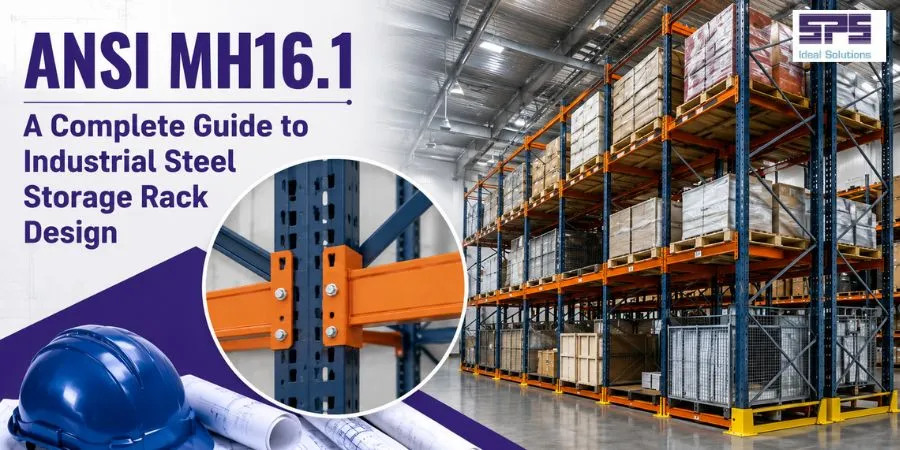
ANSI MH16.1: A Complete Guide to Industrial Steel Storage Rack Design
Industrial steel storage racks are essential for warehouses that need safe and organized pallet storage. However rack design involves more than selecting beams and upright frames. The system must be engineered around load requirements. Structural stability. Warehouse conditions. Installation requirements. The ANSI MH16.1 standard provides an important engineering framework for industrial steel storage rack systems. Understanding this standard helps warehouse owners. Engineers. Designers. Rack manufacturers. Facility managers make informed decisions about rack capacity and structural performance. Let’s explore what ANSI MH16.1 means. What the standard covers. How it relates to rack design. Why it matters for warehouse safety. How it differs from OSHA requirements. It also explains how SPS Ideal Solutions can support custom industrial storage rack requirements.
What Is the American National Standards Institute (ANSI)?
The American National Standards Institute (ANSI) is a private nonprofit organization that coordinates and oversees the development of voluntary consensus standards in the United States. ANSI helps ensure that standards are developed through an open and balanced process while addressing industry requirements for safety. quality. performance. and efficiency.
In the industrial racking ANSI plays an important role by accrediting organizations that develop standards for products and systems. For example. ANSI MH16.1 provides requirements related to the design and use of industrial steel storage racks. These standards help engineers. manufacturers. and warehouse operators develop safer and properly designed racking systems.
What is ANSI MH16.1?
ANSI MH16.1 is a standard associated with the design of industrial steel storage racks. It provides engineering criteria for evaluating structural components used in material storage rack systems. The ANSI MH16.1 framework addresses important design factors such as structural strength. stability. load conditions. connections. rack components. and anchorage. The objective is to help create storage systems capable of safely supporting their intended loads under applicable design conditions.
The term ANSI/RMI MH16.1 is also commonly used when discussing this rack design specification. RMI refers to the Rack Manufacturers Institute. The specification is particularly relevant when engineers and manufacturers evaluate structural requirements for industrial steel storage racks. For warehouse projects. ANSI/RMI MH16.1 requirements should be considered together with applicable building codes. seismic requirements. site conditions. installation practices. and operational safety requirements.
Key Requirements of ANSI MH16.1
The ansi mh16.1 framework focuses on structural performance. Rack systems need to be evaluated according to their intended loads configuration structural members and operating conditions.
Important design considerations include:
| Design Consideration | Why It Matters |
| Rack Loads | Determines the required structural capacity |
| Upright Frames | Transfer vertical loads toward the floor |
| Beams | Support stored products and pallet loads |
| Bracing | Improves structural stability |
| Connections | Transfer forces between rack components |
| Anchoring | Helps secure the rack to the supporting floor |
| Deflection | Helps control excessive structural movement |
| Seismic Conditions | May influence structural and anchorage design |
The ansi mh16 1 approach also works with recognized structural design methods for determining the strength and stiffness of rack components. ANSI information explains that the standard establishes minimum structural requirements for applicable steel storage racks.
The ansi/rmi mh16.1 specification should not be treated simply as a product label. Proper rack design requires consideration of the actual application. Loads rack dimensions component properties connections floor conditions and environmental forces can all influence the final design.
How to Design an ANSI MH16.1-Compliant Rack System
Designing a rack system according to ANSI MH16.1 starts with understanding the warehouse application.
1. Determine the Storage Requirements
Start by identifying pallet dimensions. Pallet weight. Number of pallets per bay. Required storage height. Number of beam levels. Required aisle space.
2. Establish Structural Loads
Engineers need accurate load information before selecting structural components. The design should consider the intended pallet loads along with relevant operational and environmental forces.
3. Select Rack Components
Upright frames, Beams. Bracing, Base plates, Connections, Anchors must work together as a structural system. Component selection should be based on engineering calculations rather than appearance alone.
4. Evaluate Seismic Requirements
Warehouse location can affect rack design. Areas with seismic activity may require additional structural evaluation, Anchorage, Frame stability, Connection performance become especially important when seismic forces are part of the design criteria.
5. Review Floor and Installation Conditions
The warehouse floor plays an important role in rack performance. Engineers should evaluate floor capacity. Anchor requirements. Installation conditions. Rack alignment.
6. Complete Engineering Review
The final design should be reviewed by qualified professionals based on the applicable edition of ANSI MH16.1 along with relevant building codes and project requirements.
The ANSI RMI MH16 1 approach therefore supports a systematic design process rather than a one-size-fits-all rack solution.
Why ANSI MH16.1 Matters for Warehouse Safety
Warehouse racks carry substantial loads at significant heights. A structural problem can therefore create serious risks for workers. Products. Equipment. Facility operations.
Following applicable ANSI MH16.1 design principles can help organizations make better decisions about rack capacity. Structural configuration. Anchorage. Stability. Seismic considerations.
Another important factor is preventing unauthorized modifications. Adding extra storage levels. Changing beam sizes. Removing braces. Increasing pallet weights can alter the original design assumptions.
The ANSI MH16.1 framework is therefore valuable during both initial design and system evaluation. Warehouse operators should also inspect racks regularly and address visible damage promptly.
It is important to remember that a rack standard does not replace safe warehouse operations. Forklift practices. Load placement. Rack inspections. Operator training. Damage management all contribute to warehouse safety.
ANSI MH16.1 vs OSHA Standards
ANSI MH16.1 and OSHA requirements serve different purposes. The ANSI MH16.1 specification focuses primarily on structural engineering considerations for industrial steel storage racks. OSHA focuses on workplace safety. This distinction is important when developing a warehouse rack project. ANSI MH16.1 can help address questions related to structural capacity. rack configuration. component design. stability. and engineering requirements.
OSHA requirements address broader workplace safety concerns. These can include safe material handling practices. employee protection. workplace hazards. and equipment operation. Therefore. companies should not treat ANSI MH16.1 and OSHA as interchangeable requirements. A properly planned warehouse should consider both structural design requirements and applicable workplace safety obligations.
| ANSI MH16.1 | OSHA |
| Focuses on rack structural design | Focuses on workplace safety |
| Addresses engineering considerations | Addresses employee safety requirements |
| Supports rack capacity evaluation | Supports safe work practices |
| Relevant to rack design professionals | Relevant to employers and workplace operations |
| Works with applicable building codes | Works with applicable workplace regulations |
Understanding the difference between these requirements helps warehouse operators avoid relying on a single standard for every aspect of rack safety.
Why Choose SPS Ideal Solutions for Industrial Steel Storage Rack?
SPS Ideal Solutions can be a practical resource for businesses looking for industrial steel storage rack solutions based on their specific storage requirements. Rather than limiting customers to standard configurations. the company focuses on understanding factors such as rack dimensions, load requirements, storage configurations and material-handling conditions to help identify a suitable solution for the application.
For projects where structural performance is important. customers should provide accurate information about pallet loads, rack dimensions, storage heights, operating conditions and required configurations. If your warehouse requires a customized industrial steel storage rack solution. contact SPS Ideal Solutions to discuss your application requirements and explore a solution suited to your storage needs.
About The Author

Recent Post




Popular Post