What Is Selective Pallet Racking and How Does It Work?
Efficient warehouse storage depends on using a racking solution that provides organized access to inventory while making good use of available floor space. A selective pallet racking system is one of the most widely used solutions for warehouses that handle different palletized products. It provides direct access to individual pallets without requiring operators to move other pallets first. A selective pallet racking system can support different pallet sizes and load requirements when it is properly designed. This makes selective racking suitable for manufacturing facilities. distribution centers, logistics operations, retail warehouses, automotive facilities and other industrial storage environments.
What Is Selective Pallet Racking?
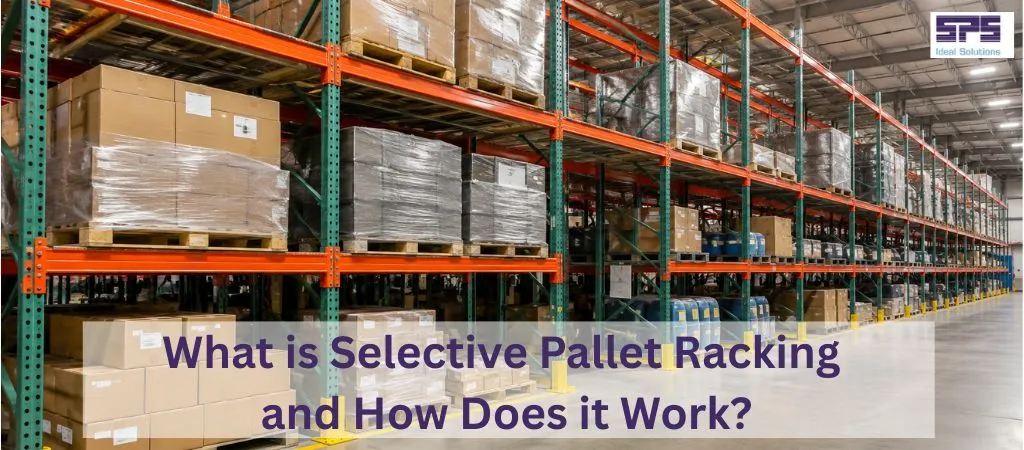
Selective pallet racking is a steel storage structure designed to store palletized goods across multiple vertical levels. A selective pallet rack normally consists of upright frames. horizontal beams. pallet supports. and other safety components.
The main purpose of a selective pallet rack is to provide direct access to stored pallets. Each storage position can generally be accessed from the warehouse aisle. This accessibility makes selective pallet racking useful for businesses that manage many product types with frequent inventory movement.
Unlike high-density storage systems that may prioritize maximum storage density. selective racking focuses heavily on accessibility. A warehouse can organize different products by SKU. product category. batch. or inventory requirement.
How Does Selective Pallet Racking Work?
A selective racking system works by creating individual pallet storage positions along warehouse aisles. Upright frames support horizontal beams at different heights. Pallets are placed on these beams using forklifts or other material-handling equipment.This Warehouse Racking configuration allows businesses to organize inventory efficiently while maintaining direct access to stored pallets.
The warehouse layout determines the number of rack rows. aisle widths. storage levels. and available pallet positions. Forklifts travel through the aisles to place pallets into specific locations.
When inventory is required. the forklift can access the selected pallet directly. This working method reduces unnecessary pallet movement and can simplify inventory management.
A selective pallet racking system can also be configured according to warehouse height. pallet dimensions. product weight. forklift requirements. and operational needs. Proper engineering is essential because rack dimensions and load capacity must match the intended application.
Types of Selective Pallet Racking
Different warehouse conditions may require different selective racking configurations. The most common options include single-deep configurations and double-deep configurations.
A single-deep selective pallet rack provides direct access to every pallet position from the aisle. This configuration is suitable for warehouses where inventory accessibility is a major priority.
A double-deep configuration places pallet positions deeper within the rack. This approach can increase storage density. However. access requirements and material-handling equipment must be considered during system design.
A selective pallet rack can also be customized with different beam heights. frame depths. storage levels. and accessories. The correct configuration depends on the warehouse layout and operational requirements.
Key Components of Selective Pallet Racking
A selective pallet racking system includes several structural components that work together to create a safe storage structure.
| Component | Main Function |
| Upright Frames | Provide vertical structural support |
| Horizontal Beams | Support pallets across each storage level |
| Pallet Supports | Provide additional support beneath pallets |
| Base Plates | Connect upright frames to the warehouse floor |
| Row Spacers | Maintain spacing between adjacent rack rows |
| Aisle Protection | Help reduce damage caused by material-handling equipment |
| Safety Accessories | Improve overall rack protection and operational safety |
Upright frames carry the vertical load while beams support pallets at each storage level. Base plates help secure the rack structure to the floor. Additional accessories can provide protection against forklift impact and improve warehouse safety.
The design of a selective pallet rack should consider pallet weight. pallet dimensions. rack height. beam capacity. floor conditions. seismic conditions where applicable. and material-handling equipment.
Advantages of Selective Pallet Racking
One major advantage of selective pallet racking is direct pallet accessibility. Operators can reach individual pallets without moving multiple loads. This can simplify picking operations and improve inventory control.
Another benefit is flexibility. A selective racking system can accommodate different pallet sizes and storage requirements through suitable engineering and configuration.
Selective racking also makes effective use of vertical warehouse space. Instead of storing products only across the floor. businesses can use available building height to create additional storage levels.
A selective pallet rack can also support organized inventory management. Products can be assigned to specific rack locations according to SKU. turnover rate. product category. or operational requirements.
Key benefits include:
- Direct access to individual pallets
- Efficient use of vertical warehouse space
- Flexible storage configuration
- Easy inventory organization
- Compatibility with common forklift operations
- Suitable for different warehouse applications
- Expandable design for changing storage needs
These benefits make selective pallet racking a practical option for warehouses that need a balance between storage capacity and inventory accessibility.
Applications of Selective Pallet Racking
A selective pallet racking system can be used across many industrial environments. Manufacturing facilities can use selective racking to store raw materials. finished products. components. and packaging materials.
Distribution centers can use selective racking for organizing products that require frequent picking. Third-party logistics facilities can also benefit from direct access because they may handle inventory belonging to multiple customers.
Automotive warehouses can use a selective pallet rack for storing parts. components. and packaged materials. Retail distribution operations can use the system to organize products according to SKU or product category.
Other applications include:
- Manufacturing warehouses
- Distribution centers
- Third-party logistics facilities
- Automotive storage
- Retail distribution
- Industrial parts storage
- General warehouse operations
The suitability of a selective pallet rack depends on product characteristics. warehouse dimensions. storage requirements. and material-handling processes.
Why Choose SPS Ideal Solutions for Warehouse Racking Solutions?
SPS Ideal Solutions provides industrial storage and material-handling solutions designed around different warehouse requirements. Its capabilities include custom steel storage solutions that can support applications involving manufacturing. automotive. logistics. and other industrial operations.
For businesses considering a selective pallet racking system. a customized approach can help ensure that the rack configuration matches the required pallet dimensions. load requirements. warehouse layout. and operational process.
SPS Ideal Solutions can be considered when a business needs an industrial racking partner capable of developing solutions around specific storage requirements rather than relying only on standard configurations. Looking for a customized warehouse racking solution? Contact SPS Ideal Solutions today to discuss your storage requirements and find the right racking solution for your operation.
About The Author

Recent Post


Popular Post